Why Recruitment Is the First Step in a Successful Employee Lifecycle
Every employee journey begins before an employee officially joins an organization. It begins with recruitment

For many companies, recruitment is often seen as simply filling open positions. A vacancy becomes available, candidates apply, interviews are conducted, and eventually a candidate is hired.
But recruitment plays a much bigger role than that.
It is the first step in the employee lifecycle.
The people an organization hires can influence its future capabilities, workforce capacity, and ability to support business priorities. Recruitment should therefore be managed not as isolated HR activity, but as the beginning of a broader journey that continues throughout an employee's relationship with the organization.
Recruitment Is More Than Filling a Vacancy
Every recruitment process starts with a business need. An organization may need additional people because the business is growing, a new role is required, or an existing employee has left. The immediate objective may be to fill the position, but effective recruitment involves a series of connected activities.
Organizations need to identify the hiring requirement, manage candidate applications, coordinate interviews, support the selection process, and complete the hiring journey.
When these activities are managed through disconnected processes, recruitment can become more difficult to coordinate.
HR teams may spend more time managing administrative activities. Hiring managers may have limited visibility into candidate progress. Candidates may also experience an unclear or inconsistent application journey.
A structured recruitment process helps bring these activities together and creates a clearer path from identifying a workforce need to hiring the right person.
Why Recruitment Is the Beginning of the Employee Lifecycle
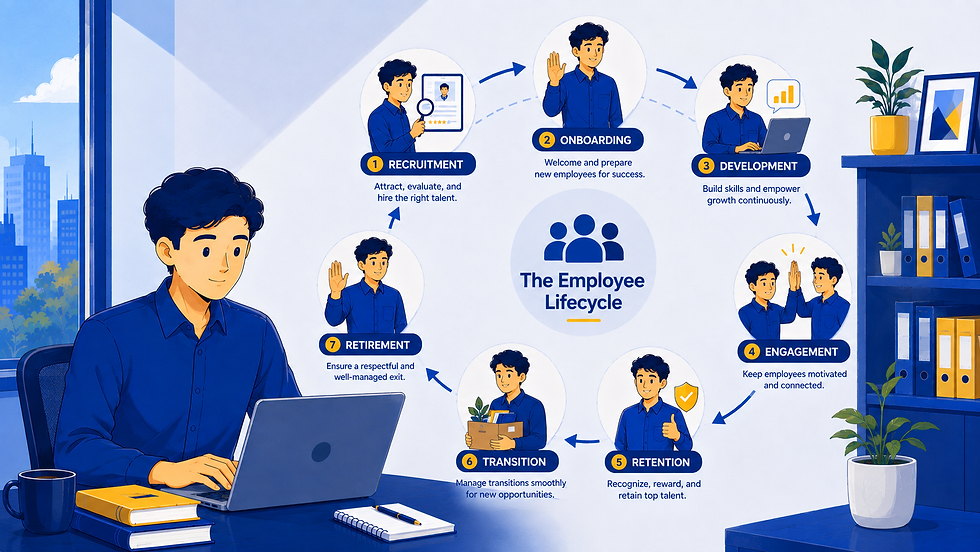
The employee lifecycle represents the different stages of a person's journey with an organization.
Recruitment is the first interaction between a candidate and the organization.
It may start with job posting, an online application, or communication during the selection process.
Once the candidate is hired, the next stage of the journey begins.
The organization then needs to manage employee information, support HR processes, administer time and absence, manage payroll and benefits, support performance, develop skills, identify talent potential, and prepare future leaders.
This makes recruitment more than a hiring process.
It is the first connection between the organization and its future employee
From Job Requisition to Hiring: What Does a Connected Recruitment Process Look Like?
A recruitment journey involves several important stages.
A connected approach helps organizations manage these stages through a more structured process.
1. Recording the Job Requisition
The recruitment journey begins when an organization identifies the need for a new employee. Before the recruitment process starts, the hiring requirement needs to be recorded. Job requisition management provides a clear starting point by documenting the need for a position and helping organizations begin the recruitment process in a structured way.
This creates a stronger connection between workforce needs and hiring activities.
2. Managing Online Applications and Candidate Documents
Once a position is opened, candidates need a simple and accessible way to apply. Candidates can apply online and upload relevant documents as part of their application. Managing these activities through a connected recruitment process helps organizations organize candidate information more effectively.
Instead of treating every application as a separate activity, organizations can manage candidate information as part of the broader recruitment journey.
3. Tracking Candidate Progress, Interviews, and Selection
Recruitment does not end when a candidate submits an application. Candidates move through different stages of the hiring process.
They may need to track the status of their application, participate in interviews, and go through a selection process before a final decision is made. Managing interview scheduling and selection activities requires coordination between HR teams, hiring managers, and other stakeholders.
A structured process can help organizations manage candidate progress more effectively while providing better visibility into the overall recruitment journey.
4. Moving From Candidate Selection to Hiring
Once the right candidate has been selected, the recruitment process enters its final stage. The organization needs to prepare the offering letter and complete the hiring process.
Automated workflow can support the creation of offering letters and help automate parts of the hiring process.
This creates a smoother transition from candidate selection to becoming part of the organization. At this point, the recruitment journey reaches an important milestone.
The candidate is becoming an employee.
Why a Connected Recruitment Process Matters
When recruitment activities are managed separately, the overall process can become more difficult to coordinate. Job requisitions, candidate applications, documents, interviews, selection activities, and hiring processes may all require separate administrative efforts.
A connected recruitment process helps bring these activities together. The journey becomes easier to understand:

This gives HR teams and hiring stakeholders a clearer view of how candidates move through the recruitment journey. More importantly, it helps organizations see recruitment as a connected business process rather than simply a collection of administrative tasks.
How HARPA Supports the Recruitment Journey
HARPA supports organizations in managing key stages of the recruitment process as part of its broader Human Capital Management solution.
The recruitment journey can begin with recording job requisitions and continue through online applications, candidate document uploads, status tracking, interview scheduling, and candidate selection.
HARPA can also support the creation of offering letters and a more automated hiring process.
This creates a more connected approach to managing the journey from identifying a workforce need to bringing a new employee into the organization. The value is not simply in managing individual recruitment activities.
The value comes from connecting those activities into a clearer recruitment journey.
Recruitment Is Where the Employee Journey Begins
Hiring the right person is an important milestone, but recruitment is only the beginning.
Once a candidate becomes an employee, the organization enters the next stage of the employee lifecycle. The focus moves from finding and selecting people to managing their journey within the organization.
Employee information needs to be managed. HR processes need to support employees and managers. Organizations need visibility into their workforce as employees grow and develop. --- HARPA is a localized Human Capital Management platform designed to support organizations across the employee lifecycle through connected HR processes. Recruitment is where that journey begins.
Through its Recruitment capabilities, HARPA helps organizations manage key stages of the hiring journey, from recording job requisitions to managing candidate applications, interview scheduling, candidate selection, offering letters, and hiring.

Frequently Asked Questions
What is recruitment management?
Recruitment management is the process of managing activities involved in identifying hiring needs, receiving applications, coordinating interviews, selecting candidates, and completing the hiring process.
Why is recruitment important in the employee lifecycle?
Recruitment is important because it is the first stage of the employee lifecycle. It begins when an organization identifies a workforce need and continues until a selected candidate becomes an employee.
What are the main stages of a recruitment process?
The recruitment process can include job requisition, online applications, document uploads, candidate status tracking, interview scheduling, candidate selection, offering letters, and hiring.
How does HARPA support recruitment?
HARPA supports key stages of the recruitment journey, including job requisition recording, online applications, document uploads, candidate tracking, interview scheduling, candidate selection, offering letters, and hiring processes.
What comes after recruitment in the employee lifecycle?
After recruitment and hiring, the next stage focuses on managing the employee within the organization. This creates a natural transition into Core HR and the broader Human Capital Management journey.